

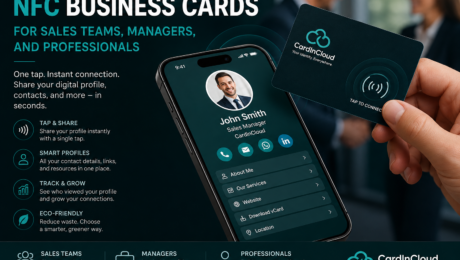
A paper card can introduce you. An NFC business card can start the relationship.
That is the real difference. For sales teams, managers, and professionals, speed matters, first impressions matter, and follow-up matters even more. If someone meets you for ten seconds, your card should not end the conversation. It should open the next step instantly.
Why NFC business cards are getting real attention
NFC business cards are not just a modern version of paper cards. They change how people connect in real business situations.
With one tap, a person can open your digital profile on their phone and get far more than a name and phone number. They can see your role, company, contact details, services, website, social channels, location, and even the right call-to-action. That makes the interaction faster, cleaner, and more useful.
This is exactly why NFC business cards are becoming more relevant for teams that work in sales, management, partnerships, events, consulting, and client-facing roles.
Why paper cards are no longer enough
Paper cards still exist, but they have limits that hurt performance.
They get lost. They become outdated. They offer almost no space. They cannot track engagement. They cannot be updated after printing. And in many meetings, people take the card politely and never use it again.
For professionals who care about visibility and response rates, that is a weak system.
An NFC business card solves that by turning a static object into a live digital identity. The card stays simple in the hand, but the experience behind it becomes dynamic.
What sales teams gain from NFC business cards
Sales teams need speed, consistency, and better conversion from every meeting.
An NFC card helps a salesperson share the right information in seconds without asking the lead to type anything manually. Instead of saying “I’ll send you the details later,” the rep can share everything on the spot. That reduces friction and keeps momentum high.
It also creates consistency across the team. Every sales rep can present a professional profile with the same brand quality, the same structure, and the same clear next steps.
For a company using CardInCloud, this becomes even more powerful. Each sales team member can have a branded digital profile connected to the company identity, which means the customer is not just seeing one person. They are seeing a complete, credible business presence.
Why managers and leaders should care
Managers are not only networking for themselves. They represent departments, teams, and the company’s image.
When a manager shares an NFC business card, it shows preparedness and digital maturity. It tells partners, vendors, clients, and stakeholders that the company values efficiency and modern communication. That matters in business development, hiring, partnerships, and enterprise conversations.
Managers also benefit from easier control. With platforms like CardInCloud, businesses can manage team profiles, keep branding aligned, and update details without reprinting cards every time someone changes a title, number, or responsibility.
That is not just convenient. It is operationally smarter.
Why professionals build stronger personal brands with it
Professionals are judged quickly. Sometimes in a meeting. Sometimes at an event. Sometimes in the few seconds after someone scans a profile.
A strong NFC business card helps professionals look more complete. It gives space for a clear identity, a polished profile photo, job title, achievements, contact methods, social links, portfolio, and business information in one place.
That makes the person easier to remember and easier to trust.
CardInCloud supports this shift by giving professionals a smart digital profile that feels more premium than a plain contact card. Instead of handing out a piece of paper, they are sharing a professional identity that stays live and relevant.
What people usually ask: Are NFC business cards worth it?
Yes, especially for people who meet clients, partners, candidates, suppliers, or prospects regularly.
They are worth it because they reduce friction, improve presentation, and make it easier for the other person to act immediately. A good NFC business card is not only about looking modern. It is about making connection simpler and follow-up more likely.
The real value becomes obvious when the card is connected to a strong digital profile. That is where the experience moves from “interesting” to “useful.”
The SEO and discoverability angle most companies miss
When businesses think about NFC cards, they often focus only on the physical product. That is too small a view.
The real asset is the digital profile behind the card. If that profile is structured well, branded well, and built with clear business information, it becomes part of the company’s wider online visibility. That matters for branded search, local discovery, trust, and consistency across channels.
This is one reason platforms like CardInCloud matter more than basic redirect tools. They help businesses present professional digital identities, not just links. That gives teams a stronger footprint online and offline at the same time.
Why this is easy to share on social media
NFC business cards are naturally shareable because the idea is visual, fast, and easy to demonstrate.
A short video of someone tapping a card and opening a polished business profile is simple content, but it communicates innovation instantly. That makes it strong for LinkedIn, Instagram Reels, sales presentations, and product demos.
It also creates a quotable message people remember: one tap, instant profile, better connection.
The business case for founders and decision-makers
For founders, directors, and operations leaders, the question is not whether NFC cards look good. The real question is whether they improve consistency, efficiency, and brand perception.
In most cases, the answer is yes.
They reduce print waste. They simplify updates. They help teams present the same brand standard. They support digital transformation without forcing users into complicated workflows. And they create a more measurable, manageable identity layer for staff.
That is why CardInCloud fits well for organizations, not just individuals. It gives companies a way to scale professional identity across teams, branches, and roles.
One practical move to make today
Start with your highest-visibility people first.
Equip sales staff, managers, business development roles, front-facing executives, and event teams with NFC business cards connected to strong digital profiles. Then standardize the experience across the company. That small move can improve how your business is seen in meetings, pitches, and day-to-day networking almost immediately.
A business card should not be the end of the interaction. It should be the fastest path into your professional world.
That is why NFC business cards are no longer a nice extra for sales teams, managers, and professionals. They are becoming the smarter default.
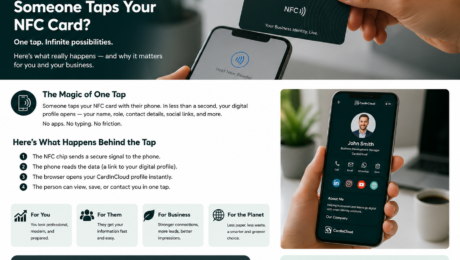
A business card used to end the conversation. An NFC card starts one.
When someone taps your NFC card, they are not just opening a link. They are stepping into your live digital identity — your profile, contact details, company links, social channels, and the actions you want them to take next.
That is the real power of NFC business cards: one tap turns a short meeting into a measurable digital interaction.
The Tap Is Only the Beginning
When someone brings their phone close to your NFC card, the phone reads a small chip inside the card. That chip contains a secure link connected to your digital profile.
No app is needed. No typing is required. No manual search is involved.
The phone simply detects the card and shows a notification. When the person taps that notification, your profile opens instantly in the browser.
This means your business identity is no longer limited to printed text. It becomes active, editable, trackable, and much easier to share.
What Happens Technically When Someone Taps Your NFC Card?
Here is the simple version.
The NFC chip inside your card stores a web link. When the phone touches or comes close to the card, the phone reads that link and opens your digital profile.
From there, the visitor can view your details, save your contact, call you, message you, visit your website, open your location, check your social links, or explore your company information.
With a platform like CardInCloud, this experience becomes more than a basic contact page. The tap leads to a professional profile built for real business use, not just a static link.
That profile can include your name, job title, company brand, phone number, WhatsApp, email, website, map location, social media links, videos, certificates, branches, and business information.
Your Contact Details Become Actionable
A paper card depends on the other person doing the work. They need to keep it, remember it, type your number, search your website, or manually save your contact.
Most people do not do that.
An NFC card removes the friction. After the tap, the visitor can act immediately.
They can:
- Save your contact directly to their phone.
- Call you with one tap.
- Open WhatsApp instantly.
- Send an email.
- Visit your website.
- Follow your social accounts.
- Open your company location on the map.
- Share your profile with someone else.
This matters because every extra step reduces action. The easier you make the next move, the higher the chance the person actually takes it.
Why This Matters for Sales Teams
For sales teams, managers, consultants, and professionals, the biggest problem is not sharing contact information. The real problem is staying remembered after the meeting.
A printed card can be lost. A digital profile can stay alive.
When a sales representative taps an NFC card with a prospect, the prospect does not receive a dead object. They receive an interactive business profile that can continue the conversation after the meeting ends.
This is especially useful for teams because the company can keep every profile aligned with the brand. Names, titles, phone numbers, photos, departments, and links can be managed from one place.
That is where CardInCloud becomes valuable for organizations. It gives businesses a smarter way to manage employee profiles, company identity, NFC cards, QR codes, and digital presence without forcing every employee to build something alone.
Your NFC Card Can Be Updated Anytime
One of the strongest benefits of NFC cards is that the card itself does not need to change every time your information changes.
If your phone number changes, your title changes, your website changes, or your company updates its branding, the digital profile can be updated online.
The card still works. The QR code still works. The link still points to the latest version of your profile.
This solves one of the biggest problems with printed business cards: they become outdated quickly.
With CardInCloud, a company can update profiles from the dashboard instead of reprinting hundreds of cards every time a team member changes role, phone number, or department.
That is not just convenient. It reduces waste, saves money, and keeps the company identity consistent.
What Does the Visitor See After the Tap?
The visitor should see a clean, branded, mobile-friendly profile.
The best NFC card experience is not crowded. It should answer three questions fast:
- Who is this person?
- What company do they represent?
- What action should I take next?
A strong profile shows the person’s name, photo, position, company logo, main contact buttons, and key business links. It should load fast and look professional on mobile screens.
This is where design matters. If the profile looks messy, the card loses value. If the profile looks premium, the tap creates trust.
CardInCloud focuses on this exact moment: turning a simple tap into a professional digital impression.
The Hidden Value: Analytics
Here is the part many businesses miss.
When someone taps a paper card, you know nothing. You do not know if they kept it, opened your website, called later, or forgot about you.
With a digital NFC profile, you can start measuring interaction.
Depending on the platform setup, a business can track profile visits, clicks, engagement, locations, devices, and actions. This gives teams a better understanding of how people interact with their profiles.
For managers, this is powerful.
It means digital business cards are not only a branding tool. They become a small analytics layer for networking, sales activity, events, customer meetings, and team visibility.
Why NFC Cards Are Good for Branding
An NFC card creates a small but important moment of surprise.
Someone taps the card, your profile opens, and the experience feels modern. That moment is shareable because it is simple, visible, and easy to understand.
This is why NFC cards work well on social media too. A short video showing a card tap, a profile opening, and a contact being saved can explain the value in seconds.
The social media angle is clear: people do not share “contact details.” They share smart experiences.
A good NFC card gives your brand a visual story: modern company, professional team, less paper, faster connection, smarter follow-up.
NFC Card SEO: Why Digital Profiles Can Help Search Visibility
A well-built digital profile can also support your online visibility.
Search engines and AI search tools understand structured, public, branded pages better than scattered contact details across social media. When your company profiles, employee pages, business information, and links are organized under one platform, your digital identity becomes easier to discover and connect.
For businesses, the keyword angle is important. Terms like “NFC business card,” “digital business card,” “digital profile,” “business profile,” and “team digital identity” should appear naturally across profile pages and articles.
This helps people and search engines understand what your business offers.
CardInCloud can use this structure to help companies build a stronger digital presence, especially when profiles are connected to company pages, QR codes, NFC cards, and clear business categories.
The Business Case: Less Printing, More Control
For founders, HR teams, sales managers, and enterprise decision-makers, NFC cards are not just about looking modern.
They solve operational problems.
A company that prints paper cards for every employee faces repeated costs, outdated information, inconsistent branding, and no visibility into usage.
A digital profile system gives the company more control.
The team can standardize employee identity, update details quickly, manage profiles from a dashboard, and give every employee a professional sharing tool.
This is especially useful for growing companies, hotels, agencies, medical teams, consultants, real estate teams, and enterprise sales departments.
The stronger the team presence, the stronger the brand memory.
What Should Your NFC Card Open?
The card should not open a random page. It should open a focused profile designed for action.
A strong NFC card profile should include:
- Clear name and title.
- Company logo and brand colors.
- Direct contact buttons.
- Save contact option.
- WhatsApp or phone action.
- Email action.
- Website link.
- Social links.
- Location link.
- Company description.
- Optional certificates, videos, or service links.
- Analytics and admin control for teams.
The profile should feel like a digital front desk for the person or company.
How CardInCloud Uses NFC Card Technology
CardInCloud uses NFC and QR technology to connect physical business cards, desk stands, stickers, and printed materials to live digital profiles.
This means a company can give employees NFC cards while also placing QR codes on desks, reception areas, brochures, menus, offices, vehicles, or event booths.
One identity can appear in many places.
That is the bigger idea: your profile should not live only inside your card. It should be available wherever customers, partners, or visitors meet your brand.
For teams, CardInCloud helps manage this from one system. Instead of every employee using different links and styles, the company can create a unified digital identity layer.
The Best Action to Take Today
If you already use NFC cards, check what happens after the tap.
Do not only ask, “Does the link open?”
Ask better questions:
- Does the profile load fast?
- Does it look premium on mobile?
- Is the contact easy to save?
- Are the main actions clear?
- Is the branding consistent?
- Can the company update it later?
- Can you measure visits and clicks?
- Does it make the person look more professional?
If the answer is no, the NFC card is not the problem. The profile experience is.
The Card Is Physical. The Relationship Is Digital.
An NFC card is a bridge between the real meeting and the digital follow-up.
The tap creates the first impression. The profile builds the trust. The actions create the opportunity.
That is why modern teams are moving from paper cards to live digital profiles. They do not just want to share contact details. They want to be remembered, found, saved, measured, and contacted faster.
When someone taps your NFC card, they should not just see your information.
They should understand your value.
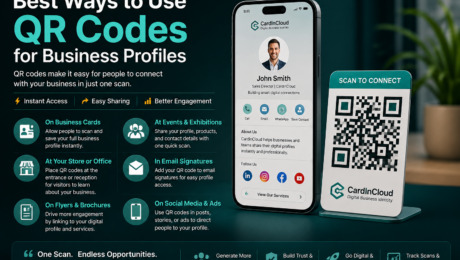
A business profile should not sit hidden inside a website menu, a printed brochure, or a forgotten email signature. With one QR code, a customer, visitor, investor, or partner can open your company profile in seconds and take action immediately.
That is why the best ways to use QR codes for business profiles are not only about sharing a link. They are about turning every physical touchpoint into a live digital entry point for your brand.
A QR Code Turns Your Business Profile Into a Real-World Gateway
A QR code gives your business profile a physical presence. It connects your offline world — offices, shops, counters, packages, uniforms, brochures, events, and printed materials — with your online identity.
Instead of asking people to search your company name, type a website address, or save contact details manually, you give them one simple action: scan and open.
This matters because people act faster when the path is short. A business profile connected to a QR code can show your company information, contact buttons, location, social media, services, portfolio, videos, reviews, team profiles, and direct communication options in one clean place.
For CardInCloud, this is exactly where QR codes become powerful. A company can create a professional digital business profile, connect it to a dynamic QR code, and place that QR anywhere customers already interact with the business.
Use QR Codes at Reception and Front Desk Areas
The reception desk is one of the most valuable places to use a QR code for a business profile. Visitors are already waiting, looking around, and trying to understand who you are.
A small acrylic stand, wall sign, or desk display with a QR code can guide them to your business profile instantly.
This can work well for:
- Clinics and medical centers
- Hotels and hospitality businesses
- Real estate offices
- Consulting companies
- Training centers
- Showrooms
- Government service desks
- Corporate offices
When visitors scan the QR code, they should not land on a messy page. They should see a polished business profile with clear actions: call, WhatsApp, location, services, team, reviews, and social links.
CardInCloud helps businesses make this experience feel premium. The QR code is not just a technical tool. It becomes part of the company’s first impression.
Put QR Codes on Business Cards, NFC Cards, and Employee Profiles
Paper business cards are easy to lose and hard to update. A QR code on a business card solves part of that problem, but combining QR with NFC makes the experience stronger.
An employee can share their digital profile in two ways: tap the NFC card or let the person scan the QR code. This gives flexibility because not every situation is the same. Some people prefer tapping, while others prefer scanning.
For teams, this is more important. A company can issue CardInCloud profiles for employees, connect each profile to an NFC card and QR code, and manage those profiles from one dashboard.
This creates a cleaner identity system for the whole team. If an employee changes job title, phone number, department, or social link, the profile can be updated without printing new cards.
That is a real business advantage: less waste, faster updates, and stronger control over company identity.
Add QR Codes to Email Signatures and Digital Documents
A QR code is not only for printed materials. It can also be useful inside digital documents, proposals, PDFs, catalogs, invoices, presentations, and email signatures.
This gives your business profile more chances to be opened.
For example, a sales proposal can include a QR code that leads to the company profile or the sales representative’s profile. A PDF catalog can include a QR code that opens the latest service page or contact options. An invoice can include a QR code that leads to support, payment information, or business details.
This is a simple SEO and brand visibility advantage. The more often your business profile is opened, shared, and linked from different touchpoints, the more your brand gains digital signals and user engagement.
The keyword angle is clear: businesses searching for “QR codes for business profiles,” “digital business profile,” “corporate digital profile,” or “smart business card platform” are not only looking for design. They are looking for a system that helps people find, trust, and contact them faster.
Use QR Codes on Storefronts, Windows, and Walls
A storefront QR code can work even when the business is closed. Someone passing by can scan and still get your profile, opening hours, location, services, menu, booking link, WhatsApp, or social media.
This is one of the easiest ways to turn a physical location into a 24/7 digital access point.
Restaurants can show menus and reservation links. Clinics can show services and appointment contact buttons. Real estate companies can show listings and agent profiles. Training centers can show courses and registration links.
The key is to keep the profile simple. A person scanning from outside does not want to read a long corporate page. They want quick answers.
A strong QR business profile should answer these questions fast:
Who are you?
What do you offer?
Where are you located?
How can I contact you now?
Why should I trust you?
CardInCloud profiles are useful here because they can organize this information in a mobile-friendly way. The QR scan should feel instant, clean, and professional.
Use QR Codes in Events, Exhibitions, and Networking
Events move fast. People meet many companies, collect many brochures, and forget most of them.
A QR code helps your business profile stay alive after the conversation ends.
Instead of handing out only printed material, your team can place QR codes on booth displays, roll-up banners, badges, staff cards, brochures, and demo screens. Visitors can scan the profile and save your company details instantly.
This also creates a strong social media angle. A clean QR profile is highly shareable because it reduces friction. People can send the profile link on WhatsApp, LinkedIn, or email after the event.
The most shareable line here is simple:
A QR code does not replace the human conversation. It makes the conversation easier to remember.
That is why QR codes are especially powerful for sales teams, founders, consultants, recruiters, and business development teams.
Connect QR Codes to Google Reviews and Social Proof
For many businesses, trust is the biggest barrier. People may like your service, but they still want proof.
A business profile can use QR codes to guide people toward Google Reviews, testimonials, social media pages, certifications, case studies, or portfolio work.
This is very useful for service businesses. A customer who scans your profile should quickly see why your business is credible.
CardInCloud can support this by placing review links, social links, videos, certificates, and business information inside one professional profile. Instead of sending people to five different places, the QR code brings them to one organized profile that points them in the right direction.
This is not only about looking modern. It is about reducing doubt.
Use Dynamic QR Codes Instead of Static QR Codes
One of the biggest mistakes businesses make is printing static QR codes that cannot be changed later.
A static QR code points to one fixed link. If the link changes, the printed QR code becomes useless. A dynamic QR code is much better because the destination can be managed and updated without reprinting the code.
For business profiles, this is critical.
Companies change phone numbers, team members, offers, services, branches, campaigns, and landing pages. A dynamic QR system gives them control.
CardInCloud is built around this idea. The profile can stay live and updated, while the QR code remains the same. This protects your printed materials, NFC cards, signs, and displays from becoming outdated.
For decision-makers, this is the business angle: QR codes are not a small design element. They are part of identity management, customer access, and operational efficiency.
What Is the Best Way to Use QR Codes for a Business Profile?
The best way to use QR codes for a business profile is to connect one professional, mobile-friendly, updateable profile to every important customer touchpoint.
That means the QR code should not lead to a random page. It should lead to a profile that is clear, fast, branded, and action-focused.
A strong business profile should include:
- Company name and logo
- Short business description
- Contact buttons
- WhatsApp or direct message link
- Location and working hours
- Services or products
- Social media links
- Team or employee profiles
- Reviews or trust signals
- Save-contact option
- Analytics and scan tracking when available
This is where CardInCloud gives businesses more than a QR code. It gives them a structured digital business identity that can be shared, updated, managed, and measured.
Track Scans and Learn What People Actually Do
A QR code becomes more valuable when you know how people use it.
Businesses should track scans, visits, clicks, profile views, and interactions where possible. This helps teams understand which touchpoints are working.
For example, a restaurant may discover that QR codes on tables get more scans than posters. A clinic may find that reception desk scans lead to more WhatsApp messages. A sales team may learn which employee profiles get the most engagement after events.
This turns QR codes from a passive tool into a business signal.
Analytics help answer real questions:
- Where are people scanning?
- Which profile gets the most visits?
- Which contact button gets the most clicks?
- Which campaign or location performs better?
- Are customers only viewing, or are they taking action?
For founders, managers, and marketing teams, this is where QR codes become strategic. They can guide better decisions, not just decorate printed materials.
Keep the Design Clean and the Call to Action Clear
A QR code needs a reason to be scanned. Placing a code without context is weak.
Do not write only “Scan me.” Make the benefit clear.
Better examples:
- Scan to view our company profile
- Scan to contact our team
- Scan to save our business details
- Scan to see our services
- Scan to connect with our sales team
- Scan to open our digital profile
The design should be clean, branded, and easy to scan. Avoid placing QR codes on busy backgrounds. Keep enough space around the code. Make sure it is large enough for the scanning distance.
This small detail can change the result. A QR code that looks professional builds trust before the scan even happens.
The Action Businesses Should Take Today
Start with one business profile and one high-value QR placement.
Do not overcomplicate the first step. Create a strong digital business profile, connect it to a dynamic QR code, and place it somewhere customers already look: reception, front desk, business card, storefront, proposal, or event stand.
Then measure what happens.
If people scan, improve the profile. If they do not scan, improve the placement, wording, or design. The goal is not only to use QR codes. The goal is to make your business easier to discover, contact, trust, and remember.
CardInCloud makes this practical for companies because it combines business profiles, employee profiles, NFC sharing, QR access, analytics, and profile management in one platform.
A QR code is small, but when it opens the right business profile, it can carry the full weight of your brand. The businesses that understand this will not treat QR codes as decoration. They will use them as smart doors into their digital identity.
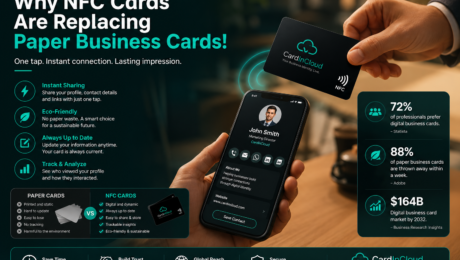
Paper business cards still exist, but they no longer match the speed of modern business. People move fast, teams change details often, and nobody wants to lose a contact because a card was misplaced, damaged, or forgotten in a pocket. That is exactly why NFC cards are replacing paper business cards.
An NFC card turns a short introduction into an instant digital experience. One tap can open a professional profile, save contact details, show social links, display a company page, and guide the other person to the next step without friction. It feels faster because it is faster. It feels smarter because it removes the small delays that usually break momentum in networking.
Paper Cards Still Look Familiar, But They Create Friction
The problem with paper cards is not that they are traditional. The problem is that they are static.
Once printed, the information is frozen. If your phone number changes, your title changes, your company address changes, or your social links change, the card becomes outdated. That creates waste, extra printing cost, and missed opportunities.
Paper cards also depend too much on the receiver. They have to keep the card, read it later, type the details manually, and decide what to do next. Every extra step reduces the chance of a real follow-up.
NFC cards remove that friction. Instead of handing over information and hoping it gets used, you guide the person directly into your digital identity.
What Makes NFC Cards Different?
NFC stands for near-field communication. In simple terms, it allows one device to send information to another with a tap. For business use, that means a person can tap your card with their phone and instantly open your profile, company page, team page, or contact details.
That one small action changes the whole experience.
Instead of giving someone a piece of paper, you give them a live profile. Instead of a printed name and number, you can share a richer identity that includes:
- Name and role
- Company and department
- Phone and email
- Website and location
- Social media links
- Portfolio or service pages
- WhatsApp connection
- Team or company profile
This is one of the biggest reasons NFC cards are replacing paper business cards. People no longer want a dead-end card. They want a direct path.
Why Businesses Are Moving Faster Than Individuals
For a single person, switching from paper to NFC already makes sense. For teams and companies, the value is much bigger.
A business does not just need a contact card. It needs consistency, control, and speed. When employees use paper cards, every update means reprinting. Every design mismatch weakens brand image. Every lost card is a missed opportunity.
With NFC-based digital profiles, businesses can create a more controlled and professional system. Employee identities can follow one brand standard. Contact information can stay updated. Profiles can point customers to the right channels. Management can create a more polished public presence without depending on old printed methods.
This is where platforms like CardInCloud become especially important. CardInCloud does not treat the card as just a card. It treats it as a digital business identity layer.
A CardInCloud NFC card can open a live professional profile instead of showing only raw contact data. That means companies can present their employees, departments, branches, and business details in a smarter way. The result is not only easier sharing. It is stronger branding, cleaner communication, and better business continuity.
Are NFC Business Cards Better Than Paper Business Cards?
Yes, in most modern business situations, they are.
They are better when you need fast sharing. Better when your details change. Better when you want people to save your contact instantly. Better when you want to look current, organized, and digital-first.
Paper cards still have a place in some traditional settings, especially where people prefer printed materials. But even there, paper often works best as a backup, not the main tool.
The real advantage of NFC is not novelty. It is usability.
People already understand tap actions because they use them for payments, access, and daily phone interactions. That makes NFC networking feel natural. It fits how people already behave.
The Branding Advantage Most Companies Ignore
There is also a branding shift happening here.
A paper card says, “Here is my information.”
An NFC profile says, “Here is my professional presence.”
That difference matters. When someone taps a card and opens a clean branded profile with a company logo, role, links, and a clear call to action, the impression is stronger. It feels more premium. It also makes the business look more serious about digital transformation.
This is where the article keyword matters from an SEO point of view too: people searching “Why NFC Cards Are Replacing Paper Business Cards” are usually not just comparing formats. They are looking for a better business identity system. That is why the winning solution is not only an NFC chip. It is the full experience behind it.
From a social media angle, this topic is naturally shareable because the contrast is easy to understand: static paper vs live digital profile. That makes it highly quotable for posts, short videos, and business education content.
The Real Business Decision
The question is no longer whether NFC cards look modern. They do.
The real question is whether your business still wants to depend on a tool that cannot update itself, cannot measure engagement, cannot guide users anywhere, and cannot reflect the speed of modern communication.
That is why NFC cards are replacing paper business cards. They save time, reduce waste, improve follow-up, and help companies present a sharper professional image. More importantly, they turn a simple introduction into a digital connection that can actually continue after the first meeting.
Businesses that adopt this early do not just look advanced. They become easier to reach, easier to trust, and easier to remember.
And that is the point. In modern networking, the best card is no longer the one people keep in their wallet. It is the one that keeps working after the conversation ends.
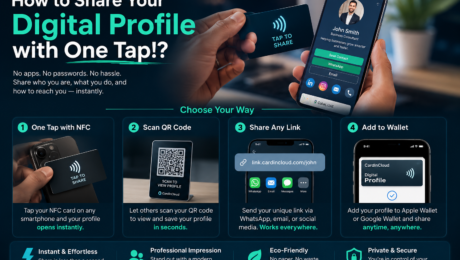
One tap can say more than a paper card ever could. Instead of handing someone a card they may lose, you can let them open your full digital profile instantly — contact details, social links, company information, portfolio, location, and more — from their phone.
That is the real power behind a modern digital profile: it turns the first meeting into a direct connection.
The Simple Idea: Tap, Open, Connect
Sharing your digital profile with one tap means using an NFC card, NFC tag, or smart QR access point to open your profile on another person’s phone.
No app is needed.
No typing is needed.
No searching is needed.
The person simply taps your NFC card with their phone, and your profile opens in the browser.
This makes networking faster, cleaner, and more professional. It also removes the awkward moment of spelling your email, repeating your phone number, or hoping the other person keeps your paper card.
How One-Tap Digital Profile Sharing Works
A one-tap digital profile usually works through NFC technology.
NFC stands for Near Field Communication. It is the same contactless technology used in payments, access cards, and smart devices. When someone taps your NFC card with their smartphone, the card sends a secure web link to the phone.
That link opens your digital profile.
From there, the visitor can view your information, save your contact, open your WhatsApp, visit your website, follow your social accounts, check your company location, or explore your services.
With CardInCloud, this experience becomes smoother because the profile is built for professional use, not just basic contact sharing.
Why This Is Better Than a Paper Business Card
A paper business card is static. Once printed, it cannot change.
If your phone number changes, the card is outdated.
If your title changes, the card is outdated.
If your company adds a new service, the card says nothing about it.
A digital profile is different. You can update it anytime, and the same NFC card or QR code continues to open the latest version.
This is where one-tap sharing becomes more than a nice feature. It becomes a smarter business identity.
Instead of giving people a small piece of paper, you give them a live professional profile that can grow with you.
What Can You Share in a Digital Profile?
A strong digital profile should not be only a contact page. It should act as a compact professional presence.
With CardInCloud, a profile can include:
- Name, job title, and company role
- Phone number, email, and WhatsApp
- Website and social media links
- Google Maps location
- Company information
- Profile photo and branding
- Save-to-contact button
- QR code sharing
- NFC one-tap access
- Analytics and interaction tracking
That means every tap can become a measurable business interaction, not just a forgotten exchange.
How CardInCloud Makes One-Tap Sharing More Professional
CardInCloud is designed for individuals, teams, and businesses that want a smarter digital presence.
A sales team can share verified employee profiles during meetings.
A hotel can let guests access concierge contacts or service profiles.
A clinic can help patients reach the right department faster.
A company can give every employee a professional digital identity under one controlled system.
The value is not only in the NFC card. The value is in the managed profile behind it.
CardInCloud helps businesses control how their people appear, how their information is updated, and how customers interact with them after the first tap.
The Business Advantage: Every Tap Can Become Data
One of the biggest problems with paper cards is that you never know what happens after you hand them out.
Did the person keep it?
Did they call later?
Did they visit your website?
Did they save your contact?
A digital profile can give businesses better visibility.
With analytics, companies can understand profile visits, interactions, clicks, and engagement. This matters for sales teams, customer-facing employees, consultants, real estate agents, hotels, clinics, and service businesses.
For founders and decision-makers, this changes the card from a printed expense into a trackable business tool.
What People Search For Before Buying This
A common search question is: “How do I share my digital business card with one tap?”
The direct answer is simple: use an NFC-enabled digital business card connected to a live digital profile.
This keyword matters because many people are no longer searching only for “business cards.” They are searching for digital business card, NFC business card, digital profile, smart business card, and contactless networking.
For SEO, businesses that adopt digital profiles early can position themselves around these modern search terms before the market becomes crowded.
Why This Works on Social Media
One-tap sharing is easy to show visually.
A short video of someone tapping an NFC card and opening a premium profile can explain the full value in seconds. That makes it strong for Instagram, TikTok, LinkedIn, and short business reels.
The most shareable message is simple:
“Your business card should not be printed once. It should stay alive.”
That line works because it turns a technical feature into a business idea people instantly understand.
How to Share Your Digital Profile with One Tap Using CardInCloud
The process is simple:
- Create your CardInCloud digital profile.
- Add your contact details, links, company information, and branding.
- Connect your profile link to an NFC card or QR code.
- Tap the card on another phone.
- Let the person open your profile and save your contact instantly.
The best part is that the card does not need to be reprinted when your profile changes. You update the profile online, and the same tap opens the updated version.
A Small Action You Can Take Today
Check your current business card and ask one honest question:
Can this card still represent me six months from now?
If the answer is no, you need something more flexible.
Start by creating one digital profile for yourself or your most customer-facing employee. Then test it in real meetings. Watch how people react when they tap, open, save, and connect in seconds.
That reaction is the moment you understand why digital profiles are replacing old cards.
One Tap Is Not Just Convenience
Sharing your digital profile with one tap is not only about speed. It is about control, professionalism, and follow-up.
A paper card ends the moment you hand it over.
A digital profile starts the relationship.
For modern teams, that difference matters. CardInCloud helps turn every introduction into a cleaner, smarter, and more measurable connection — one tap at a time.
A business card should not die in someone’s drawer. It should open a live profile, save contact details, show your brand, and help people connect with you in seconds.
That is exactly how NFC business cards work. They turn a simple tap into a professional digital experience.
What Is an NFC Business Card?
An NFC business card is a physical card with a small NFC chip inside it. NFC means Near Field Communication, the same short-range technology used in contactless payments, access cards, and quick device interactions.
When someone taps the card with a compatible smartphone, the phone reads the data stored on the chip. In most business card use cases, that data is a link.
That link opens a digital profile, company page, contact page, portfolio, booking page, or any online destination connected to the card.
With CardInCloud, the NFC card opens a smart digital profile that can include your name, job title, company information, phone number, email, WhatsApp, social links, location, website, and more.
How NFC Business Cards Work Step by Step
The process is simple:
- The NFC card contains a small chip.
- The chip is programmed with a secure profile link.
- A person taps the card using a smartphone.
- The phone reads the link instantly.
- The digital profile opens in the browser.
- The visitor can save contact details, call, message, follow, or explore the company.
No app is required. No manual typing. No paper card exchange. No risk of giving someone outdated information.
This is why NFC business cards are becoming more useful for sales teams, founders, consultants, real estate agents, medical teams, hotel staff, event teams, and enterprise employees.
Why NFC Business Cards Are Better Than Paper Cards
A paper business card is fixed. Once it is printed, it cannot change.
If your phone number changes, the card becomes outdated. If your title changes, the card becomes old. If your company updates its branding, the card no longer matches the business.
An NFC business card is different because the physical card can stay the same while the digital profile can be updated anytime.
That gives businesses a cleaner and smarter way to manage professional identity.
The real value is not the card. The real value is the live profile behind the card.
How CardInCloud Uses NFC Business Cards
CardInCloud uses NFC cards as a gateway to a complete digital business identity.
Instead of giving someone only a name and phone number, your team can share a professional profile that represents the company properly.
A CardInCloud profile can help businesses show:
- Employee contact details
- Company branding
- Social media links
- Google Maps location
- WhatsApp contact
- Website links
- Portfolio or service links
- QR code access
- Save-to-contact button
- Analytics and profile activity
This makes every employee profile part of the company’s digital presence, not just a personal contact card.
For companies, this matters because staff identity becomes organized, branded, measurable, and easier to control.
Do NFC Business Cards Work on All Phones?
Most modern smartphones support NFC. Many Android phones and newer iPhones can read NFC cards directly.
For situations where NFC is not available, a smart NFC business card should also include a QR code. This gives people two access methods: tap or scan.
CardInCloud supports this model because business sharing should be simple for everyone. NFC is fast, QR is universal, and the digital profile stays online.
Why Businesses Should Care
For a single person, an NFC business card looks modern.
For a company, it solves a bigger problem: professional identity management.
Teams often have inconsistent signatures, outdated contact information, different social links, and no clear way to track engagement. NFC business cards connected to managed digital profiles help reduce that mess.
For startups, it creates a stronger first impression. For sales teams, it makes contact sharing faster. For HR teams, it standardizes employee identity. For enterprises, it supports digital transformation without forcing users to install another app.
The SEO Angle: People Search for Smart Business Cards
Search interest around terms like “NFC business cards,” “digital business cards,” “corporate digital business cards,” and “employee digital profiles” shows a clear shift in how people think about networking.
Businesses are no longer only asking, “Where can I print business cards?”
They are asking, “How can my team share professional profiles faster?”
That shift is where platforms like CardInCloud become more valuable. The card is only the entry point. The digital identity platform is the long-term business asset.
The Social Media Angle: The Tap Is Shareable
NFC business cards work well on social media because the action is easy to show.
A short video of someone tapping a card and opening a premium profile is clear, visual, and instantly understandable. It does not need long explanation.
That makes NFC cards useful not only for networking, but also for brand storytelling.
A company can show its team using modern digital profiles and instantly communicate one message: this business is organized, updated, and ready for the future.
Action Tip: Do Not Buy NFC Cards Without a Profile Strategy
Do not treat NFC business cards as printed cards with a chip.
Before ordering cards, decide what each profile should achieve.
Should it help people call faster? Save contacts? Visit a website? Follow social media? Book an appointment? Find your location? Contact sales?
The best NFC business card has a clear journey after the tap.
With CardInCloud, that journey can be built around the company, the team, and the professional impression you want every person to leave behind.
Final Thought
NFC business cards work by turning a simple tap into a live digital connection.
But the strongest businesses will not use them only because they look modern. They will use them because they make contact sharing faster, team identity cleaner, and brand presence stronger.
The future of business cards is not paper.
It is a smart digital profile that is always ready, always updated, and always one tap away.
A business can look modern online and still feel disconnected in real life. The website says one thing, the sales team shares another, and the customer is left searching for the right contact, profile, service, or social link.
How CardInCloud Helps Businesses Build a Smarter Digital Presence is simple: it turns every employee, team member, and business contact point into a clean digital profile that can be shared instantly through NFC, QR, link, WhatsApp, or email.
Digital Presence Is No Longer Just a Website
For years, businesses treated digital presence as a website, a social media page, and maybe a Google Business Profile. That is no longer enough.
Customers now expect fast access. They want to scan, tap, save, follow, message, locate, and verify a business in seconds. They do not want to search through old paper cards, broken links, or outdated contact details.
This is where CardInCloud gives companies a stronger structure. Instead of depending only on paper business cards or scattered links, businesses can create professional digital profiles for employees, departments, branches, and teams.
Each profile becomes a live identity point.
Why Businesses Need Smarter Digital Profiles
A smart digital profile is not just a digital business card. It is a controlled, updated, and professional business identity.
With CardInCloud, a company can present contact details, job titles, phone numbers, WhatsApp links, emails, websites, social media accounts, Google Maps, videos, certificates, and important business links in one clean place.
That means every team member represents the company with the same professional standard.
For HR teams, this creates consistency.
For sales teams, it makes sharing faster.
For customer service teams, it improves trust.
For management, it gives better control over how the brand appears.
How CardInCloud Helps Businesses Build a Smarter Digital Presence
CardInCloud helps businesses move from static information to live professional identity.
A printed card becomes outdated the moment a phone number, title, branch, or link changes. A CardInCloud profile can be updated from the dashboard without reprinting everything again.
This saves cost, reduces waste, and keeps the company’s public identity accurate.
The business also gets more than a profile. It gets a managed system. Teams can create employee profiles, organize business information, control templates, use NFC cards, share QR codes, and track profile activity through analytics.
That makes digital presence measurable, not just visible.
The Real Business Value: Speed, Trust, and Control
A smarter digital presence is not about looking fancy. It is about making every interaction easier.
When a customer meets an employee, scans a QR code, or taps an NFC card, the next step should be clear. They should know who they are dealing with, how to contact them, where the business is located, and how to continue the relationship.
CardInCloud makes that process direct.
The business gains:
- Faster contact sharing
- Cleaner brand presentation
- Easier profile updates
- Better employee identity management
- More professional first impressions
- Less dependence on paper cards
- Analytics to understand engagement
For founders, managers, and decision-makers, this matters because every small interaction is part of the brand. A weak first impression can lose trust. A smooth digital experience can open the next conversation.
What Makes This Shareable?
The strongest social media angle is simple:
Your business card should not die in someone’s drawer. It should open a live digital experience.
That idea is easy to understand, easy to share, and easy to remember. It speaks to business owners, sales teams, HR departments, and modern professionals who already know that old networking tools are not enough.
A company using CardInCloud can also share employee profiles across LinkedIn, WhatsApp, email signatures, brochures, reception desks, events, and QR stands. One profile becomes useful in many places.
SEO Insight: Businesses Are Searching for Digital Identity Solutions
More companies are now searching for terms like digital business card platform, employee digital profiles, NFC business cards for teams, corporate digital identity, and smart business card platform.
That search behavior shows a clear shift. Businesses are not only looking for cards. They are looking for systems that help teams look more professional and easier to reach.
CardInCloud fits this keyword space because it is not only a personal profile tool. It is built around business identity, team profiles, NFC sharing, QR access, analytics, and centralized management.
What Should a Business Do Today?
The first step is not to replace everything at once.
Start with the people who represent the company most: sales, customer support, reception, management, HR, and public-facing staff. Give them professional digital profiles, connect those profiles to NFC cards and QR codes, and place them where customers already interact with the business.
Then watch what happens.
Which profiles get more visits?
Which links get more clicks?
Which employees need better profile content?
Which branch gets more engagement?
That data helps the business improve its digital presence with real behavior, not assumptions.
A Smarter Presence Is Built One Interaction at a Time
Businesses do not become modern because they use one new tool. They become modern when every customer touchpoint feels clear, fast, and professional.
CardInCloud helps companies build that smarter digital presence by turning ordinary contact sharing into a live, branded, measurable experience.
The question is no longer whether businesses need a digital presence. They already do. The real question is whether that presence is organized, updated, and strong enough to win trust from the first tap.
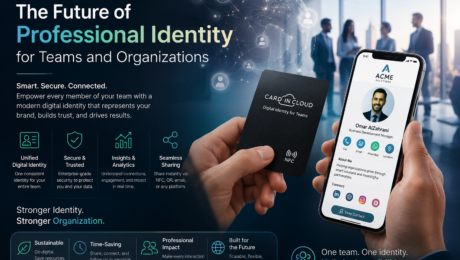
Professional identity is no longer a paper card, a forgotten email signature, or a LinkedIn profile that nobody updates. For modern teams and organizations, identity is becoming a live digital system — one that connects people, roles, contact details, company trust, and brand presence in one simple experience.
This is the future of professional identity for teams and organizations: every employee becomes easier to recognize, easier to contact, easier to verify, and easier to connect with the company they represent.
Professional Identity Is Moving From Static to Live
Traditional business identity was built around fixed materials.
A printed card.
A badge.
A brochure.
A company profile PDF.
A contact saved manually on a phone.
The problem is simple: the business changes faster than the material.
Employees change roles. Phone numbers change. Branches change. Social links change. Company services change. Marketing messages change. But the paper card stays the same until it is thrown away and printed again.
Digital professional identity solves this by making identity live.
A team member’s profile can be updated anytime. A department can change information instantly. A company can control how its people appear to clients, partners, suppliers, and the public.
This is not only about convenience. It is about control, accuracy, speed, and brand consistency.
What Is Professional Identity for Teams?
Professional identity for teams is the way an organization presents its people in a structured, trusted, and modern format.
It answers simple but important questions:
- Who is this person?
- What company do they represent?
- What is their role?
- How can I contact them?
- What links, services, or documents should I see?
- Can I trust this profile?
- Is this information updated?
For a single person, a digital profile is useful. For a team, it becomes a business system.
When every employee has a managed digital profile, the organization creates a unified professional layer across sales, HR, customer support, events, branches, field teams, and leadership.
This is where platforms like CardInCloud become important. CardInCloud helps companies create professional digital profiles for teams, connect them with NFC cards and QR codes, and manage them through a central dashboard instead of leaving every employee to present themselves differently.
Why Teams Need Digital Professional Identity Now
The modern customer does not wait.
If someone meets your sales manager, scans a QR code, taps an NFC card, or receives a profile link on WhatsApp, they expect the information to open fast and look professional.
That first impression matters.
A weak profile makes the company look unprepared. A clean digital identity makes the company look organized, modern, and serious.
For teams and organizations, this matters in five areas:
- Trust — clients can see official company-linked profiles.
- Speed — contact details can be saved in seconds.
- Control — the company decides what appears on each profile.
- Consistency — every employee follows the same brand standard.
- Analytics — teams can understand profile visits, clicks, and engagement.
This is the real shift: professional identity is no longer only about “sharing contact details.” It is becoming part of digital transformation.
The CardInCloud Angle: Identity That Works for the Whole Organization
CardInCloud is built around a practical idea: companies need more than individual digital cards. They need a system to manage professional identity across people, profiles, templates, and sharing channels.
A team can use CardInCloud to create employee digital profiles, connect them to NFC cards, generate QR codes, and update information from one dashboard. This helps organizations avoid scattered links, outdated cards, random designs, and inconsistent employee presentation.
For business owners and managers, the value is clear: every profile becomes part of the company’s official digital presence.
A sales employee can share a profile during a meeting.
A hotel staff member can let guests access service information.
A medical representative can share contact details and official links.
An event team can connect visitors directly to departments.
An HR team can manage staff identities without reprinting materials every time something changes.
That is why CardInCloud fits the future of professional identity for teams and organizations. It turns identity from a personal item into a managed business asset.
NFC and QR Are Becoming the New Front Door
The future of professional identity is not limited to a website link.
It is physical and digital at the same time.
NFC cards allow a person to tap and open a profile instantly. QR codes allow anyone to scan from a phone camera. Profile links can be shared through WhatsApp, email, social media, websites, presentations, or printed materials.
This makes identity available everywhere.
A company can place QR codes at reception desks, on brochures, inside offices, on product displays, at events, and on staff materials. Instead of forcing people to search, type, or ask for details, the organization gives them one direct access point.
That access point should be clean, fast, branded, and controlled.
This is where digital identity becomes more than a profile. It becomes a gateway.
SEO Insight: Companies Will Search for Identity Platforms, Not Just Cards
The keyword market is changing.
Businesses are no longer only searching for “digital business card.” They are searching for broader and more serious terms like:
- enterprise digital identity platform
- digital employee profiles
- team digital profiles
- NFC employee identity
- corporate digital business cards
- staff digital identity management
- professional digital profile system
- smart business card platform
This matters because it shows a change in buyer intent.
A freelancer may search for a digital card. A company searches for a system. An enterprise searches for control, security, dashboards, templates, analytics, and scalability.
That is the opportunity for platforms like CardInCloud: the product should not be positioned as a simple card replacement only. It should be positioned as a professional identity platform for organizations that want stronger digital presence and better team management.
The Business Case: Why Decision-Makers Should Care
For founders, HR managers, sales directors, and operations teams, professional identity affects more than appearance.
It affects the way people connect with the business.
A paper card usually dies after the meeting. A digital profile can stay alive, update over time, show company links, guide people to the right action, and measure engagement.
This creates business value in practical ways:
- Sales teams can share profiles faster during meetings.
- HR teams can manage employee profiles from one place.
- Marketing teams can keep brand presentation consistent.
- Customer-facing teams can provide service links instantly.
- Management can see which profiles are getting attention.
The strongest organizations do not leave identity to chance. They build systems around it.
What Makes This Shareable on Social Media?
The topic is powerful because it is easy to understand and easy to visualize.
A simple post can say:
“Your employee’s profile is now part of your company’s brand.”
That sentence is shareable because it connects identity, trust, and business reputation in one line.
Another strong social media angle:
“The business card is not dead. It became live, trackable, and managed.”
This works because it challenges an old assumption. People think digital business cards are only a modern version of paper cards. In reality, the bigger story is managed professional identity for teams.
For CardInCloud, social content should show real use cases, not abstract technology. Show a team member tapping an NFC card. Show a QR code at a reception desk. Show a company dashboard managing profiles. Show how a profile opens, saves contact details, and links back to the organization.
People understand the value when they see the flow.
What Should Companies Do Today?
A company does not need to transform everything at once.
The best first step is simple: choose one team and digitize their professional identity.
Start with sales, customer service, management, event staff, or field representatives. Give each person a digital profile. Connect the profiles to NFC cards and QR codes. Make sure every profile follows the same brand style and includes the right contact details, company links, and action buttons.
Then measure what happens.
Which profiles get visits?
Which links get clicks?
Which departments get more engagement?
Which team members need updated information?
This small move gives the company a practical entry point into digital transformation without a heavy system change.
Direct Answer: What Is the Future of Professional Identity for Organizations?
The future of professional identity for organizations is a managed digital system where every employee, department, and business unit can be recognized, contacted, and connected through live profiles.
It will combine NFC, QR codes, digital profiles, analytics, templates, security, and centralized management.
Companies will stop treating identity as printed material and start treating it as part of their digital infrastructure.
This is important because professional identity sits at the first point of contact between a company and the outside world. When that identity is clear, fast, branded, and controlled, the organization looks more serious and becomes easier to trust.
The Competitive Advantage Is Not the Card. It Is the System.
Many companies can print a card. Many tools can create a simple profile link.
The real advantage comes from the system behind it.
Can the company manage employee profiles from one place?
Can it update details instantly?
Can it keep branding consistent?
Can it track engagement?
Can it connect identity with NFC, QR, and digital sharing?
Can it support teams, not only individuals?
That is where the market is moving.
CardInCloud fits this direction because it supports the idea that professional identity should be controlled, flexible, and ready for business use. For teams and organizations, the value is not only in looking modern. The value is in becoming easier to find, easier to contact, easier to trust, and easier to manage.
The companies that adopt this early will look more organized before competitors even understand what changed.
Professional identity is becoming live. Teams that still depend only on paper cards, scattered links, and outdated contact details will look slower than they really are. The future belongs to organizations that make every person in the company a clear, connected, and trusted digital entry point.
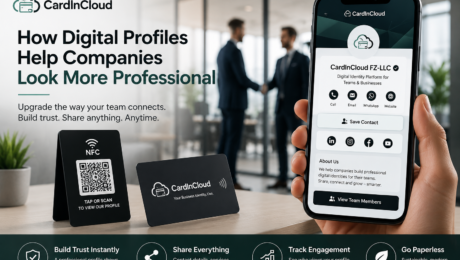
A company can lose trust before the first conversation even starts. When a customer scans a card, opens a link, or searches for a contact, the way that information appears tells them something about the business: organized or outdated, serious or improvised, easy to reach or hard to understand.
That is why digital profiles are becoming more than a modern contact page. They are part of how companies present themselves, manage their teams, and build confidence from the first touch.
Professionalism Starts Before the Meeting
A traditional business card can look good for a few seconds, but it stops there. It cannot show updated information, live links, company branches, service details, social channels, maps, or proof of work.
A digital profile gives every employee, department, or branch a complete business identity in one clean place.
Instead of handing someone a paper card with a phone number and email, the company can share a profile that includes contact details, WhatsApp, location, company links, social media, certificates, videos, and a direct save-to-contacts option.
That small difference changes the first impression.
The business no longer looks like it is just giving information. It looks structured.
Why Digital Profiles Make Companies Look More Professional
Digital profiles help companies look more professional because they create consistency. Every team member can follow the same brand style, use approved company information, and share a profile that feels connected to the business.
This matters because customers notice details.
When one employee sends a plain phone number, another sends a broken link, and another sends an outdated card, the company feels disorganized. But when every person shares a clean digital profile under the same brand, the company feels more reliable.
Professionalism is not only about design. It is about control, clarity, and trust.
Your Team Becomes Easier to Trust
People trust what they can understand quickly. A digital profile removes friction by giving customers one simple destination for everything they need.
They can call, message, open maps, visit the website, follow social channels, or save the contact without asking for extra details.
For sales teams, customer support teams, hotel staff, medical representatives, real estate agents, consultants, and event teams, this is powerful. It makes every employee easier to reach and easier to remember.
A customer should not have to search, copy numbers, or guess which account is official. A digital profile gives them the right path immediately.
CardInCloud Turns Profiles Into a Business Identity System
CardInCloud is built around this exact idea: helping companies create professional digital profiles for teams and organizations, not just individual contact pages.
With CardInCloud, a company can create a master business profile and connected employee profiles. Each profile can be shared through QR code, NFC card, WhatsApp, email, or direct link.
This gives businesses a controlled identity system where every profile carries the same professional standard.
For companies, this means:
- Employee contact details stay updated.
- Company branding stays consistent.
- Customers can reach the right person faster.
- Teams can share profiles without needing an app.
- Management can improve visibility across branches and departments.
The result is simple: the company looks more organized, more modern, and more prepared.
Digital Profiles Also Improve Brand Memory
A paper card is easy to lose. A digital profile is easier to save, revisit, and share.
This is where the social media angle becomes important. A good digital profile is not only a contact tool; it is also a shareable brand asset. Customers can forward it, employees can add it to WhatsApp messages, and sales teams can use it in daily communication.
The more often the profile appears in professional conversations, the more familiar the brand becomes.
That familiarity builds trust over time.
The SEO Angle: Digital Profiles Help People Find the Right Business Information
Search engines and AI search tools reward clear, structured, accessible information. When a business has organized digital profiles with names, roles, contact details, locations, and service links, it creates a cleaner digital footprint.
The keyword angle is clear: companies searching for “digital business profile,” “digital business card for teams,” “NFC business card for employees,” or “professional company profile” are not only looking for design. They are looking for a better way to present their people and services.
That is where digital profiles become a business visibility tool, not just a contact tool.
What Should a Company Put in a Digital Profile?
A strong digital profile should answer one question: “What does this person or company do, and how can I reach them now?”
At minimum, it should include the person’s name, role, company name, phone number, email, WhatsApp, website, location, and social links.
For a stronger profile, companies can add service links, branch details, certificates, Google reviews, portfolio links, booking links, and a short introduction.
The goal is not to add everything. The goal is to add what helps the customer take the next step.
The Business Case Is Bigger Than Looking Modern
For founders, managers, and decision-makers, digital profiles solve a real operational problem. They reduce outdated contact information, improve brand consistency, and make teams easier to manage.
They also support sales. A professional profile can help employees introduce themselves faster, follow up better, and leave a stronger impression after every meeting.
The action companies can take today is simple: review how their employees currently share contact information. If every person uses a different format, the brand is already losing consistency.
Start by creating one standard digital profile structure for the team, then connect it to QR and NFC sharing.
Professional Companies Make Contact Easy
Companies do not look professional because they use new technology. They look professional when every detail feels clear, useful, and intentional.
Digital profiles help with that.
They turn contact sharing into a branded experience. They help teams look aligned. They make customers feel they are dealing with a company that respects time, clarity, and trust.
And in a market where many businesses still rely on old paper cards and scattered links, that difference is easy to notice.
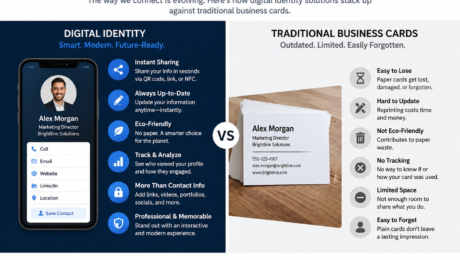
A business card used to be a handshake in your pocket. Today, it can be a live digital identity that updates instantly, tracks engagement, and connects people to the right information without printing another box of paper cards.
Digital Identity vs Traditional Business Cards is no longer just a design comparison. It is a business decision about speed, data, brand control, sustainability, and how modern companies want to be remembered.
The Old Card Still Works — But It Stays Frozen
Traditional business cards are simple, familiar, and easy to hand over. That is why they survived for so long.
But they have one major weakness: once printed, they cannot change.
If an employee changes title, phone number, email, branch, photo, department, or social link, the printed card becomes outdated. The company either keeps using incorrect information or pays again for redesign, printing, and distribution.
That small problem becomes expensive when the company has sales teams, consultants, medical representatives, real estate agents, branch managers, or customer-facing employees.
A paper card is not wrong. It is just limited.
Digital Identity Is Not Just a “Digital Card”
A digital identity is more than a contact page. It is a live professional profile that represents a person, team, or company online.
Instead of giving someone a static card, the employee can share a profile through NFC, QR code, link, WhatsApp, email, or even from printed materials. The person receiving it can open the profile on any phone without installing an app.
That profile can include contact details, job title, company logo, social links, location, portfolio links, certifications, videos, branches, and a direct “save contact” button.
The real difference is control.
With a traditional card, the company prints and hopes the information stays useful. With a digital identity, the company can update, organize, and measure the profile at any time.
Why Businesses Are Moving From Paper Cards to Digital Identity
The shift is happening because companies no longer want tools that only look professional. They want tools that also perform.
A digital identity helps businesses in four practical ways:
- Better first impression
A modern NFC or QR profile feels faster, cleaner, and more premium than handing over a card that may be thrown away. - Instant updates
Information can be changed from the dashboard without reprinting anything. - More measurable networking
Businesses can understand profile visits, clicks, interactions, and how people engage with their teams. - Lower long-term waste
Fewer reprints means less paper, less plastic waste, and fewer outdated cards sitting in drawers.
For companies with many employees, the value is not only in the card itself. The value is in managing professional identity at scale.
Digital Identity vs Traditional Business Cards: Which Is Better for Teams?
For one person, a paper card may still be enough.
For a team, it becomes harder to manage.
A company needs consistency. Every employee should have the right logo, brand colors, contact format, title style, and business information. Traditional cards often break that consistency because they are printed in batches, edited by different designers, or updated at different times.
Digital identity keeps everything under one system.
This matters for HR teams, sales teams, consultants, medical teams, event teams, and enterprise staff. The company can create profiles, edit employee information, manage templates, and keep the brand experience unified.
That is where platforms like CardInCloud become valuable. CardInCloud is built for business profiles, team digital identities, NFC sharing, QR access, analytics, and centralized profile management. It turns the business card from a printed object into a controlled digital asset.
What Businesses Should Know Before Switching
Switching to digital identity is not only about buying NFC cards. The bigger question is how the company wants people to discover, trust, and contact its team.
Before moving from traditional business cards to digital profiles, businesses should check these points:
Is the profile easy to open?
The best system should work on normal phones without forcing people to download an app.
Can the company manage employee profiles?
A serious business solution should support teams, not only individuals.
Can profiles be updated anytime?
If the company cannot edit information quickly, the digital solution loses one of its biggest advantages.
Does it support NFC and QR?
NFC is fast for face-to-face meetings. QR is useful for posters, stands, offices, events, vehicles, packaging, and printed materials.
Can performance be measured?
Analytics help the business understand which profiles are visited, which links are clicked, and which employees generate more engagement.
The SEO Angle: People Search for Digital Trust
Businesses are not only searching for “business cards” anymore. They search for terms like digital business card, enterprise digital identity platform, NFC business card, employee digital profile, and team profile management system.
This matters because customer behavior has changed. People want proof before they call. They check profiles, reviews, websites, social media, locations, and contact options.
A digital identity gives companies a searchable, shareable, and structured presence for every important person on the team.
For AI search engines and traditional search engines, clear digital profiles also help connect people, brands, services, and locations in a cleaner way.
The Social Media Angle: Shareable Profiles Beat Forgotten Cards
A paper card usually stops at one person.
A digital profile can move.
It can be shared on WhatsApp, added to Instagram bios, placed in LinkedIn messages, included in email signatures, printed as a QR code in a reception area, or used during events.
That makes it more social by nature.
The strongest shareable idea is simple:
Your business card should not die after the first meeting. It should keep working after the conversation ends.
That sentence is exactly why digital identity is easier to promote, easier to explain, and easier for customers to remember.
The Business Angle: This Is About Brand Control
For founders, managers, and decision-makers, digital identity is not a small branding upgrade. It is operational control.
When every employee shares the company in a different way, the brand becomes inconsistent. Some use old logos. Some use personal numbers. Some share incomplete links. Some forget to update their title. Some have no professional profile at all.
A platform like CardInCloud gives the company one controlled layer for professional identity.
This helps the business look more organized, especially in markets where trust, speed, and presentation matter. Hotels, clinics, real estate companies, consultants, agencies, restaurants, training centers, and enterprise teams can all use digital profiles to make every interaction cleaner.
What Is the Best First Step?
The best first step is not to replace every card overnight.
Start with the people who meet customers most often: sales, reception, management, customer support, consultants, or field representatives.
Give them digital profiles. Add NFC cards. Place QR codes in customer-facing areas. Track how people interact. Then expand across the team.
This avoids waste and gives the company real feedback before scaling.
CardInCloud and the Future of Business Identity
CardInCloud fits this shift because it treats business identity as a living system, not a one-time design file.
Companies can use CardInCloud to create professional digital profiles, connect them to NFC cards and QR codes, manage team identities from a dashboard, and give every employee a modern way to be discovered and contacted.
The goal is not to make paper cards look old. The goal is to make business communication faster, smarter, and easier to control.
Traditional cards say, “Here is my contact information.”
Digital identity says, “Here is who I am, what I do, where to find me, how to contact me, and how my company wants to be remembered.”
That is the difference modern businesses should understand. A business card is a moment. A digital identity is a presence.
- 1
- 2
