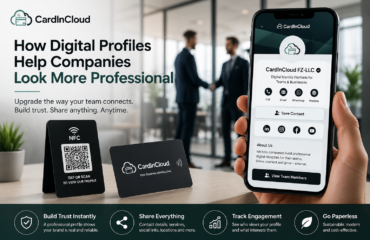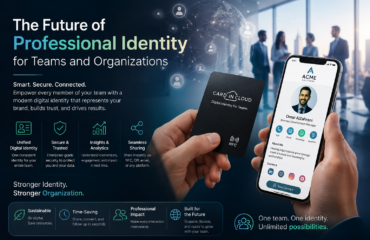
A business card used to end the conversation. An NFC card starts one.
When someone taps your NFC card, they are not just opening a link. They are stepping into your live digital identity — your profile, contact details, company links, social channels, and the actions you want them to take next.
That is the real power of NFC business cards: one tap turns a short meeting into a measurable digital interaction.
The Tap Is Only the Beginning
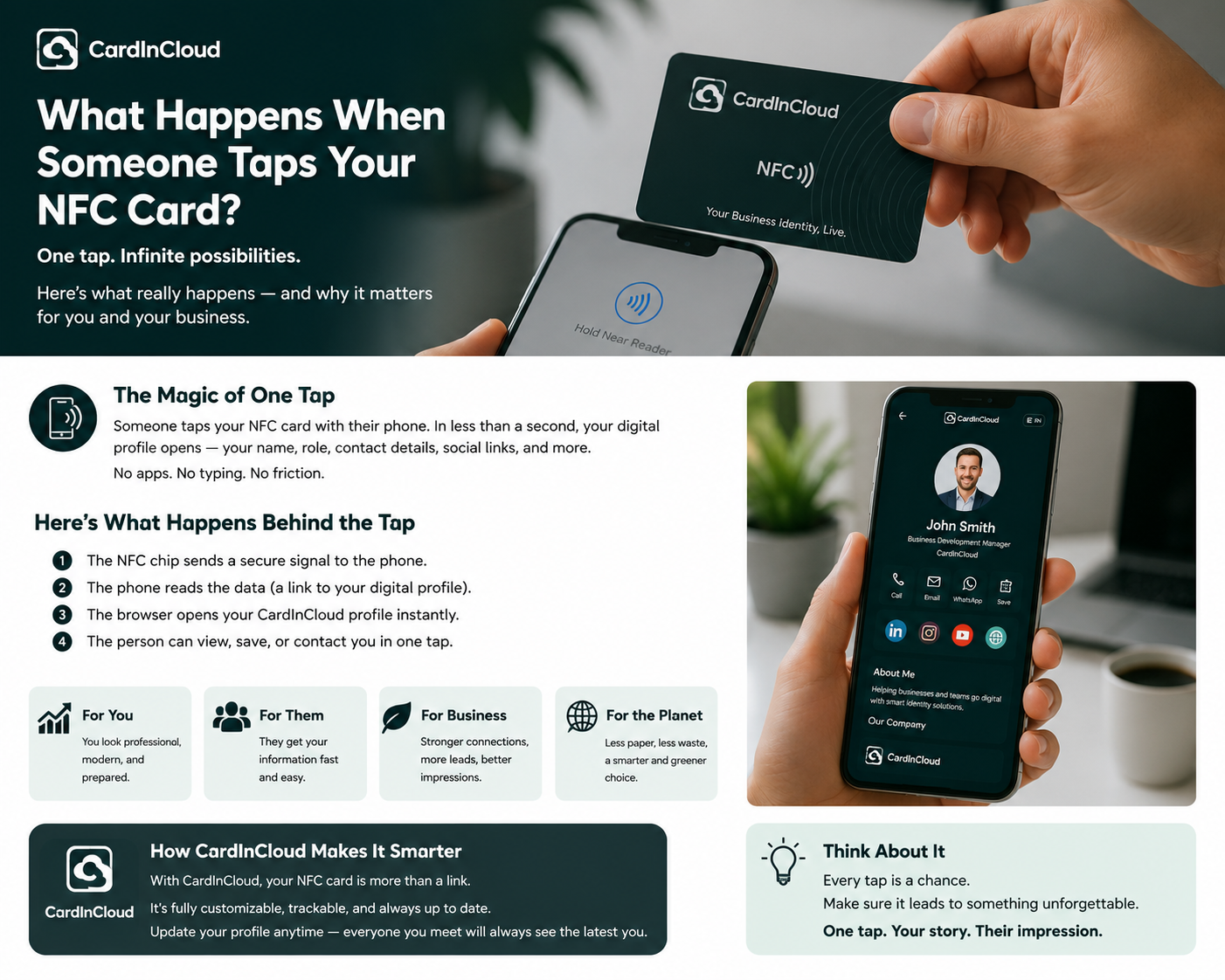
When someone brings their phone close to your NFC card, the phone reads a small chip inside the card. That chip contains a secure link connected to your digital profile.
No app is needed. No typing is required. No manual search is involved.
The phone simply detects the card and shows a notification. When the person taps that notification, your profile opens instantly in the browser.
This means your business identity is no longer limited to printed text. It becomes active, editable, trackable, and much easier to share.
What Happens Technically When Someone Taps Your NFC Card?
Here is the simple version.
The NFC chip inside your card stores a web link. When the phone touches or comes close to the card, the phone reads that link and opens your digital profile.
From there, the visitor can view your details, save your contact, call you, message you, visit your website, open your location, check your social links, or explore your company information.
With a platform like CardInCloud, this experience becomes more than a basic contact page. The tap leads to a professional profile built for real business use, not just a static link.
That profile can include your name, job title, company brand, phone number, WhatsApp, email, website, map location, social media links, videos, certificates, branches, and business information.
Your Contact Details Become Actionable
A paper card depends on the other person doing the work. They need to keep it, remember it, type your number, search your website, or manually save your contact.
Most people do not do that.
An NFC card removes the friction. After the tap, the visitor can act immediately.
They can:
- Save your contact directly to their phone.
- Call you with one tap.
- Open WhatsApp instantly.
- Send an email.
- Visit your website.
- Follow your social accounts.
- Open your company location on the map.
- Share your profile with someone else.
This matters because every extra step reduces action. The easier you make the next move, the higher the chance the person actually takes it.
Why This Matters for Sales Teams
For sales teams, managers, consultants, and professionals, the biggest problem is not sharing contact information. The real problem is staying remembered after the meeting.
A printed card can be lost. A digital profile can stay alive.
When a sales representative taps an NFC card with a prospect, the prospect does not receive a dead object. They receive an interactive business profile that can continue the conversation after the meeting ends.
This is especially useful for teams because the company can keep every profile aligned with the brand. Names, titles, phone numbers, photos, departments, and links can be managed from one place.
That is where CardInCloud becomes valuable for organizations. It gives businesses a smarter way to manage employee profiles, company identity, NFC cards, QR codes, and digital presence without forcing every employee to build something alone.
Your NFC Card Can Be Updated Anytime
One of the strongest benefits of NFC cards is that the card itself does not need to change every time your information changes.
If your phone number changes, your title changes, your website changes, or your company updates its branding, the digital profile can be updated online.
The card still works. The QR code still works. The link still points to the latest version of your profile.
This solves one of the biggest problems with printed business cards: they become outdated quickly.
With CardInCloud, a company can update profiles from the dashboard instead of reprinting hundreds of cards every time a team member changes role, phone number, or department.
That is not just convenient. It reduces waste, saves money, and keeps the company identity consistent.
What Does the Visitor See After the Tap?
The visitor should see a clean, branded, mobile-friendly profile.
The best NFC card experience is not crowded. It should answer three questions fast:
- Who is this person?
- What company do they represent?
- What action should I take next?
A strong profile shows the person’s name, photo, position, company logo, main contact buttons, and key business links. It should load fast and look professional on mobile screens.
This is where design matters. If the profile looks messy, the card loses value. If the profile looks premium, the tap creates trust.
CardInCloud focuses on this exact moment: turning a simple tap into a professional digital impression.
The Hidden Value: Analytics
Here is the part many businesses miss.
When someone taps a paper card, you know nothing. You do not know if they kept it, opened your website, called later, or forgot about you.
With a digital NFC profile, you can start measuring interaction.
Depending on the platform setup, a business can track profile visits, clicks, engagement, locations, devices, and actions. This gives teams a better understanding of how people interact with their profiles.
For managers, this is powerful.
It means digital business cards are not only a branding tool. They become a small analytics layer for networking, sales activity, events, customer meetings, and team visibility.
Why NFC Cards Are Good for Branding
An NFC card creates a small but important moment of surprise.
Someone taps the card, your profile opens, and the experience feels modern. That moment is shareable because it is simple, visible, and easy to understand.
This is why NFC cards work well on social media too. A short video showing a card tap, a profile opening, and a contact being saved can explain the value in seconds.
The social media angle is clear: people do not share “contact details.” They share smart experiences.
A good NFC card gives your brand a visual story: modern company, professional team, less paper, faster connection, smarter follow-up.
NFC Card SEO: Why Digital Profiles Can Help Search Visibility
A well-built digital profile can also support your online visibility.
Search engines and AI search tools understand structured, public, branded pages better than scattered contact details across social media. When your company profiles, employee pages, business information, and links are organized under one platform, your digital identity becomes easier to discover and connect.
For businesses, the keyword angle is important. Terms like “NFC business card,” “digital business card,” “digital profile,” “business profile,” and “team digital identity” should appear naturally across profile pages and articles.
This helps people and search engines understand what your business offers.
CardInCloud can use this structure to help companies build a stronger digital presence, especially when profiles are connected to company pages, QR codes, NFC cards, and clear business categories.
The Business Case: Less Printing, More Control
For founders, HR teams, sales managers, and enterprise decision-makers, NFC cards are not just about looking modern.
They solve operational problems.
A company that prints paper cards for every employee faces repeated costs, outdated information, inconsistent branding, and no visibility into usage.
A digital profile system gives the company more control.
The team can standardize employee identity, update details quickly, manage profiles from a dashboard, and give every employee a professional sharing tool.
This is especially useful for growing companies, hotels, agencies, medical teams, consultants, real estate teams, and enterprise sales departments.
The stronger the team presence, the stronger the brand memory.
What Should Your NFC Card Open?
The card should not open a random page. It should open a focused profile designed for action.
A strong NFC card profile should include:
- Clear name and title.
- Company logo and brand colors.
- Direct contact buttons.
- Save contact option.
- WhatsApp or phone action.
- Email action.
- Website link.
- Social links.
- Location link.
- Company description.
- Optional certificates, videos, or service links.
- Analytics and admin control for teams.
The profile should feel like a digital front desk for the person or company.
How CardInCloud Uses NFC Card Technology
CardInCloud uses NFC and QR technology to connect physical business cards, desk stands, stickers, and printed materials to live digital profiles.
This means a company can give employees NFC cards while also placing QR codes on desks, reception areas, brochures, menus, offices, vehicles, or event booths.
One identity can appear in many places.
That is the bigger idea: your profile should not live only inside your card. It should be available wherever customers, partners, or visitors meet your brand.
For teams, CardInCloud helps manage this from one system. Instead of every employee using different links and styles, the company can create a unified digital identity layer.
The Best Action to Take Today
If you already use NFC cards, check what happens after the tap.
Do not only ask, “Does the link open?”
Ask better questions:
- Does the profile load fast?
- Does it look premium on mobile?
- Is the contact easy to save?
- Are the main actions clear?
- Is the branding consistent?
- Can the company update it later?
- Can you measure visits and clicks?
- Does it make the person look more professional?
If the answer is no, the NFC card is not the problem. The profile experience is.
The Card Is Physical. The Relationship Is Digital.
An NFC card is a bridge between the real meeting and the digital follow-up.
The tap creates the first impression. The profile builds the trust. The actions create the opportunity.
That is why modern teams are moving from paper cards to live digital profiles. They do not just want to share contact details. They want to be remembered, found, saved, measured, and contacted faster.
When someone taps your NFC card, they should not just see your information.
They should understand your value.