A business card used to be a handshake in your pocket. Today, it can be a live digital identity that updates instantly, tracks engagement, and connects people to the right information without printing another box of paper cards.
Digital Identity vs Traditional Business Cards is no longer just a design comparison. It is a business decision about speed, data, brand control, sustainability, and how modern companies want to be remembered.
The Old Card Still Works — But It Stays Frozen
Traditional business cards are simple, familiar, and easy to hand over. That is why they survived for so long.
But they have one major weakness: once printed, they cannot change.
If an employee changes title, phone number, email, branch, photo, department, or social link, the printed card becomes outdated. The company either keeps using incorrect information or pays again for redesign, printing, and distribution.
That small problem becomes expensive when the company has sales teams, consultants, medical representatives, real estate agents, branch managers, or customer-facing employees.
A paper card is not wrong. It is just limited.
Digital Identity Is Not Just a “Digital Card”
A digital identity is more than a contact page. It is a live professional profile that represents a person, team, or company online.
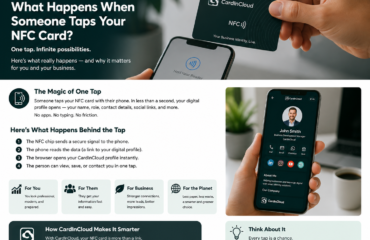
Instead of giving someone a static card, the employee can share a profile through NFC, QR code, link, WhatsApp, email, or even from printed materials. The person receiving it can open the profile on any phone without installing an app.
That profile can include contact details, job title, company logo, social links, location, portfolio links, certifications, videos, branches, and a direct “save contact” button.
The real difference is control.
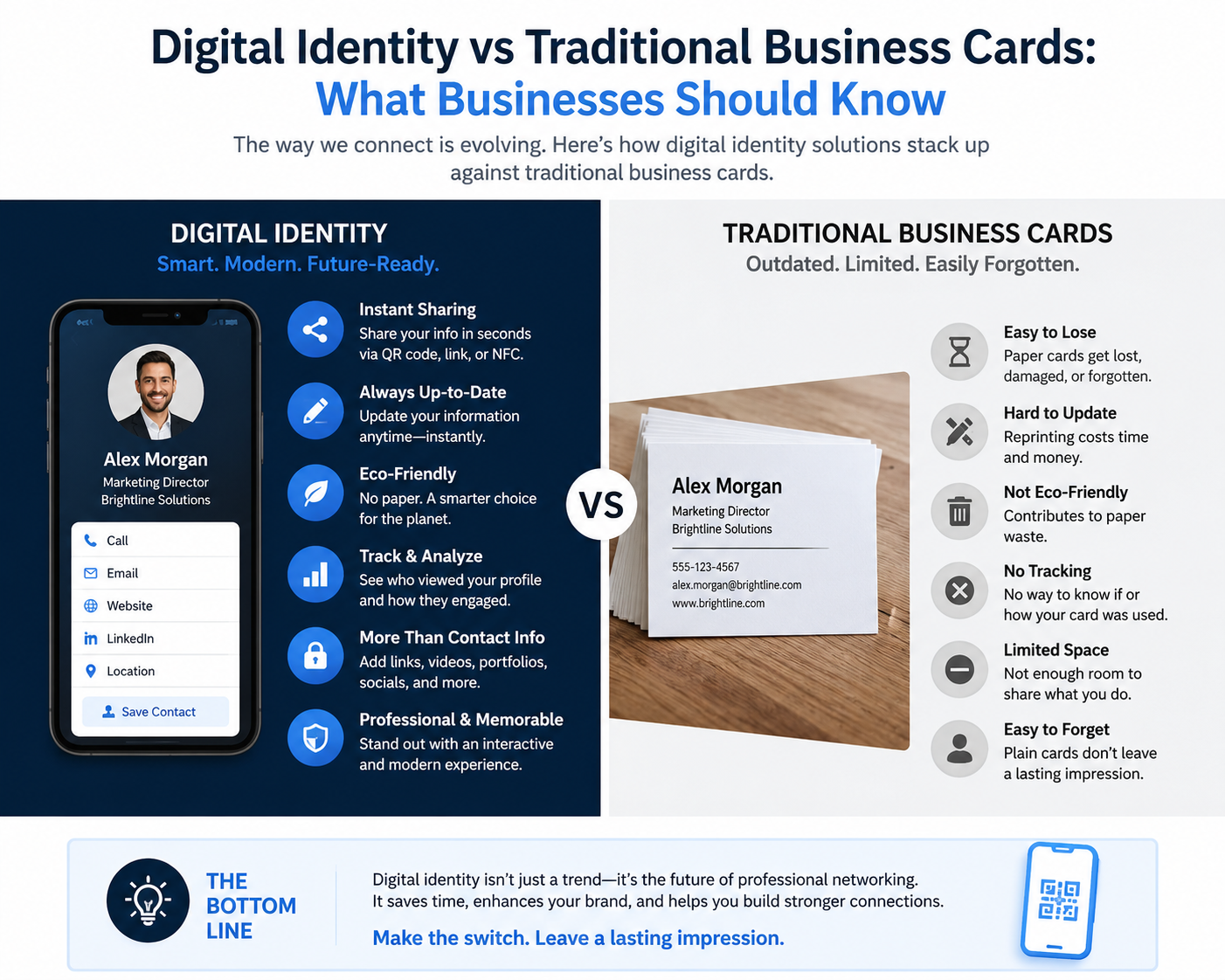
With a traditional card, the company prints and hopes the information stays useful. With a digital identity, the company can update, organize, and measure the profile at any time.
Why Businesses Are Moving From Paper Cards to Digital Identity
The shift is happening because companies no longer want tools that only look professional. They want tools that also perform.
A digital identity helps businesses in four practical ways:
- Better first impression
A modern NFC or QR profile feels faster, cleaner, and more premium than handing over a card that may be thrown away. - Instant updates
Information can be changed from the dashboard without reprinting anything. - More measurable networking
Businesses can understand profile visits, clicks, interactions, and how people engage with their teams. - Lower long-term waste
Fewer reprints means less paper, less plastic waste, and fewer outdated cards sitting in drawers.
For companies with many employees, the value is not only in the card itself. The value is in managing professional identity at scale.
Digital Identity vs Traditional Business Cards: Which Is Better for Teams?
For one person, a paper card may still be enough.
For a team, it becomes harder to manage.
A company needs consistency. Every employee should have the right logo, brand colors, contact format, title style, and business information. Traditional cards often break that consistency because they are printed in batches, edited by different designers, or updated at different times.
Digital identity keeps everything under one system.
This matters for HR teams, sales teams, consultants, medical teams, event teams, and enterprise staff. The company can create profiles, edit employee information, manage templates, and keep the brand experience unified.
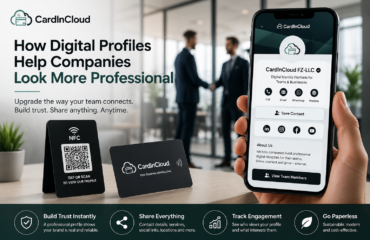
That is where platforms like CardInCloud become valuable. CardInCloud is built for business profiles, team digital identities, NFC sharing, QR access, analytics, and centralized profile management. It turns the business card from a printed object into a controlled digital asset.
What Businesses Should Know Before Switching
Switching to digital identity is not only about buying NFC cards. The bigger question is how the company wants people to discover, trust, and contact its team.
Before moving from traditional business cards to digital profiles, businesses should check these points:
Is the profile easy to open?
The best system should work on normal phones without forcing people to download an app.
Can the company manage employee profiles?
A serious business solution should support teams, not only individuals.
Can profiles be updated anytime?
If the company cannot edit information quickly, the digital solution loses one of its biggest advantages.
Does it support NFC and QR?
NFC is fast for face-to-face meetings. QR is useful for posters, stands, offices, events, vehicles, packaging, and printed materials.
Can performance be measured?
Analytics help the business understand which profiles are visited, which links are clicked, and which employees generate more engagement.
The SEO Angle: People Search for Digital Trust
Businesses are not only searching for “business cards” anymore. They search for terms like digital business card, enterprise digital identity platform, NFC business card, employee digital profile, and team profile management system.
This matters because customer behavior has changed. People want proof before they call. They check profiles, reviews, websites, social media, locations, and contact options.
A digital identity gives companies a searchable, shareable, and structured presence for every important person on the team.
For AI search engines and traditional search engines, clear digital profiles also help connect people, brands, services, and locations in a cleaner way.
The Social Media Angle: Shareable Profiles Beat Forgotten Cards
A paper card usually stops at one person.
A digital profile can move.
It can be shared on WhatsApp, added to Instagram bios, placed in LinkedIn messages, included in email signatures, printed as a QR code in a reception area, or used during events.
That makes it more social by nature.
The strongest shareable idea is simple:
Your business card should not die after the first meeting. It should keep working after the conversation ends.
That sentence is exactly why digital identity is easier to promote, easier to explain, and easier for customers to remember.
The Business Angle: This Is About Brand Control
For founders, managers, and decision-makers, digital identity is not a small branding upgrade. It is operational control.
When every employee shares the company in a different way, the brand becomes inconsistent. Some use old logos. Some use personal numbers. Some share incomplete links. Some forget to update their title. Some have no professional profile at all.
A platform like CardInCloud gives the company one controlled layer for professional identity.
This helps the business look more organized, especially in markets where trust, speed, and presentation matter. Hotels, clinics, real estate companies, consultants, agencies, restaurants, training centers, and enterprise teams can all use digital profiles to make every interaction cleaner.
What Is the Best First Step?
The best first step is not to replace every card overnight.
Start with the people who meet customers most often: sales, reception, management, customer support, consultants, or field representatives.
Give them digital profiles. Add NFC cards. Place QR codes in customer-facing areas. Track how people interact. Then expand across the team.
This avoids waste and gives the company real feedback before scaling.
CardInCloud and the Future of Business Identity
CardInCloud fits this shift because it treats business identity as a living system, not a one-time design file.
Companies can use CardInCloud to create professional digital profiles, connect them to NFC cards and QR codes, manage team identities from a dashboard, and give every employee a modern way to be discovered and contacted.
The goal is not to make paper cards look old. The goal is to make business communication faster, smarter, and easier to control.
Traditional cards say, “Here is my contact information.”
Digital identity says, “Here is who I am, what I do, where to find me, how to contact me, and how my company wants to be remembered.”
That is the difference modern businesses should understand. A business card is a moment. A digital identity is a presence.